 Byrd Lab
Byrd Lab
Byrd Lab
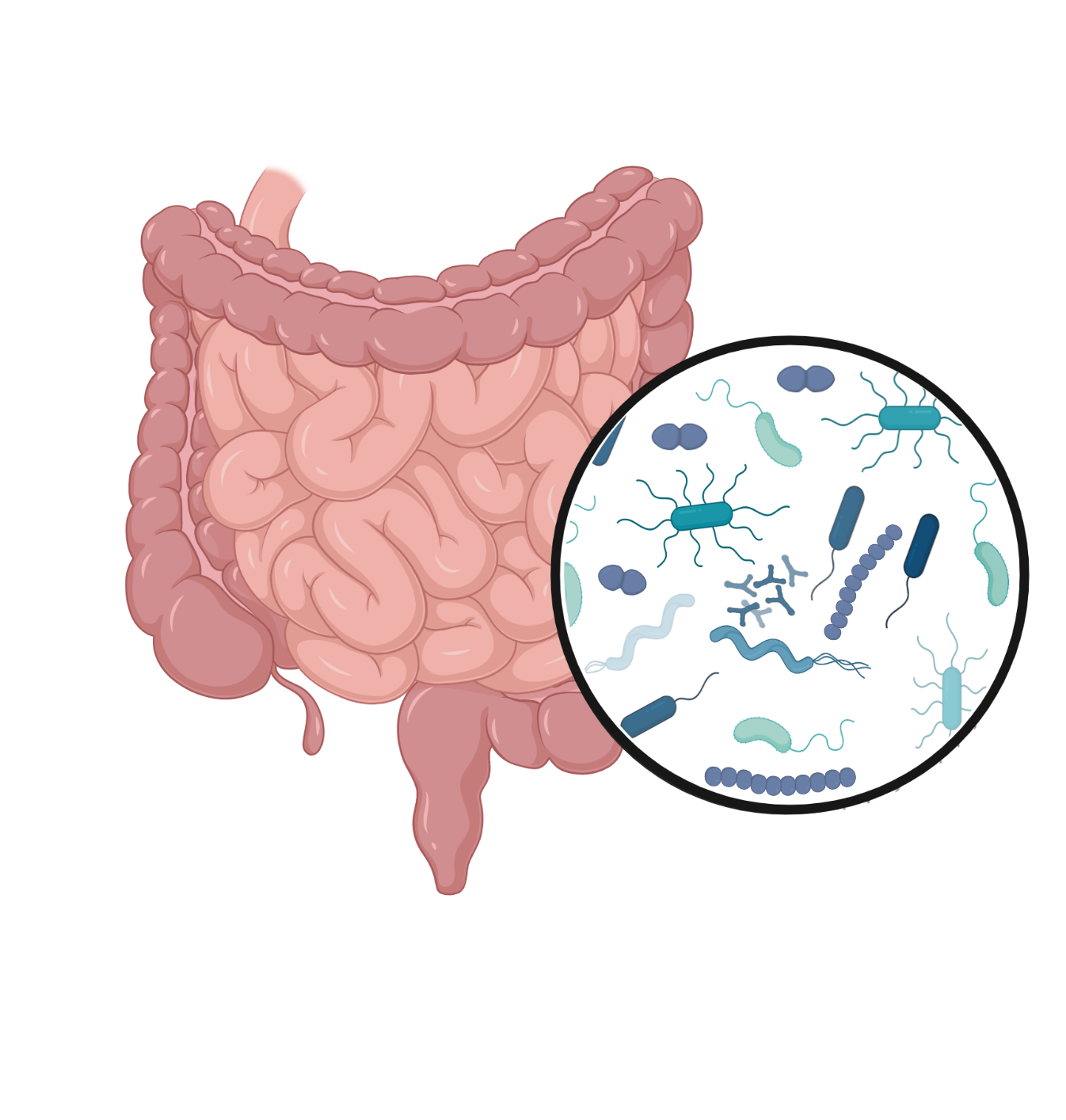
The gut microbiome is a community of trillions of microorganisms that live in the digestive tract. These microorganisms include bacteria, viruses, fungi, and more. Some oral bacteria can also make their way to the gut through chewing and swallowing or by traveling through the bloodstream.1 Changes in the intestinal lining, gut bacteria composition, or the gut environment may allow these oral-originating microbes to grow and survive in the gut.2
The microbes in the gut interact with the body's cells and play an important role in health and disease. Some types of bacteria, such as Lactobacillus, Bifidobacterium, and Bacteroides, help maintain a healthy gut and keep harmful bacteria under control. However, factors such as antibiotics, acid-reducing medications, radiation, and poor dietary habits can disrupt the normal balance of gut microbes. When this happens, harmful bacteria may grow more easily and increase the risk of illness. One example is Clostridioides difficile (C. difficile), a bacterium that can cause severe diarrhea and other intestinal problems.
Recent research suggests that the gut microbiome may also play a role in cancer risk and outcomes.3 For example, Fusobacterium nucleatum, a bacterium commonly found in the mouth, has been linked to the development and progression of colorectal cancer.4 Scientists are still working to understand exactly how microbes influence cancer. Possible explanations include the production of substances that affect the body and direct interactions between microbes and the immune system. However, additional research is needed to determine which microbes may contribute to cancer development and which may play a protective role.
One important feature of the gut microbiome is that it can be altered. Diet, physical activity, and other lifestyle behaviors can affect the types of microbes that live in the gut.5 The microbiome can also be influenced by probiotics, which are beneficial microorganisms, and prebiotics, which serve as a food source for these microorganisms.5 As researchers learn more about the connection between the gut microbiome and cancer, they may be able to develop new ways to prevent cancer and improve outcomes for individuals with the disease.
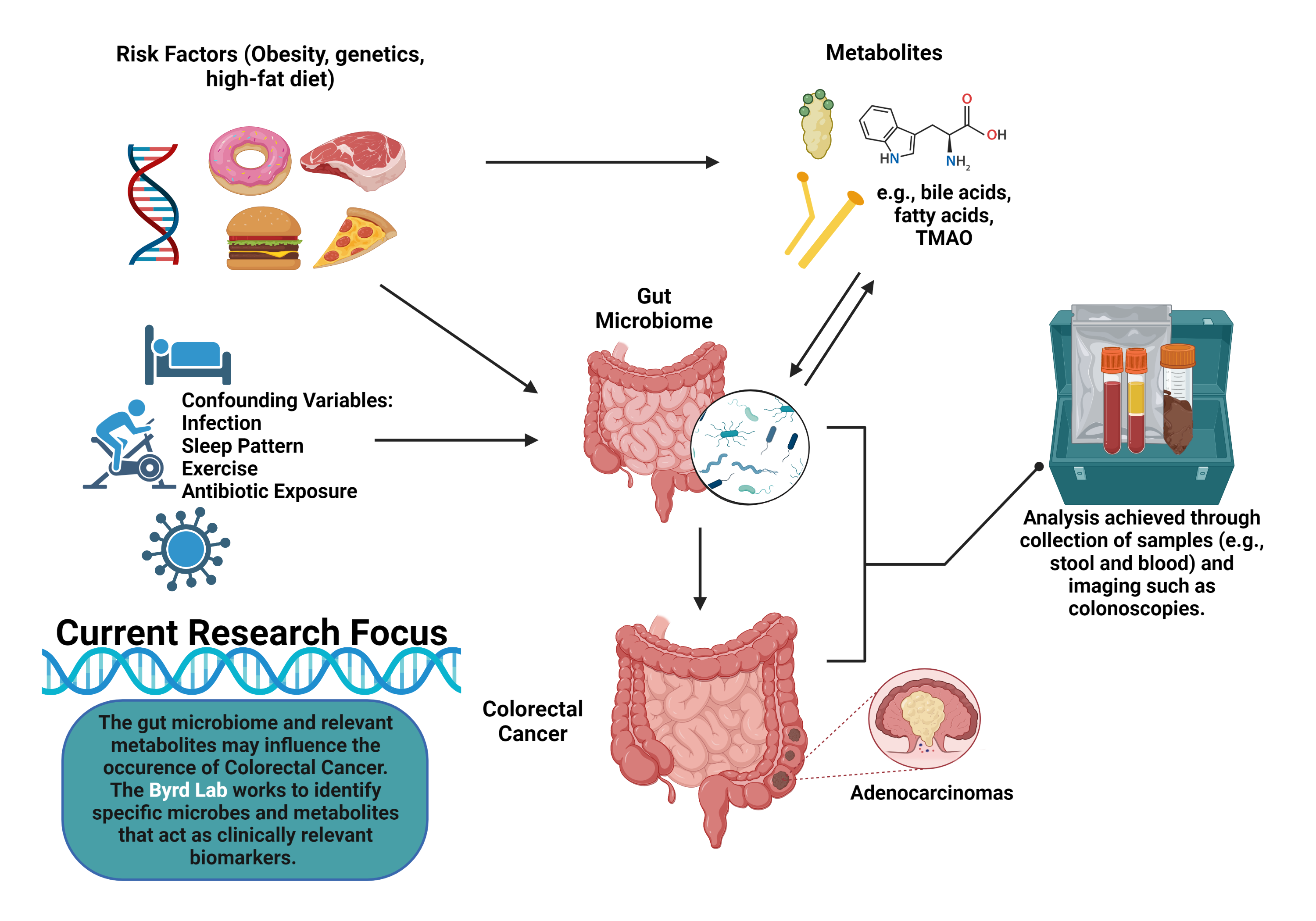
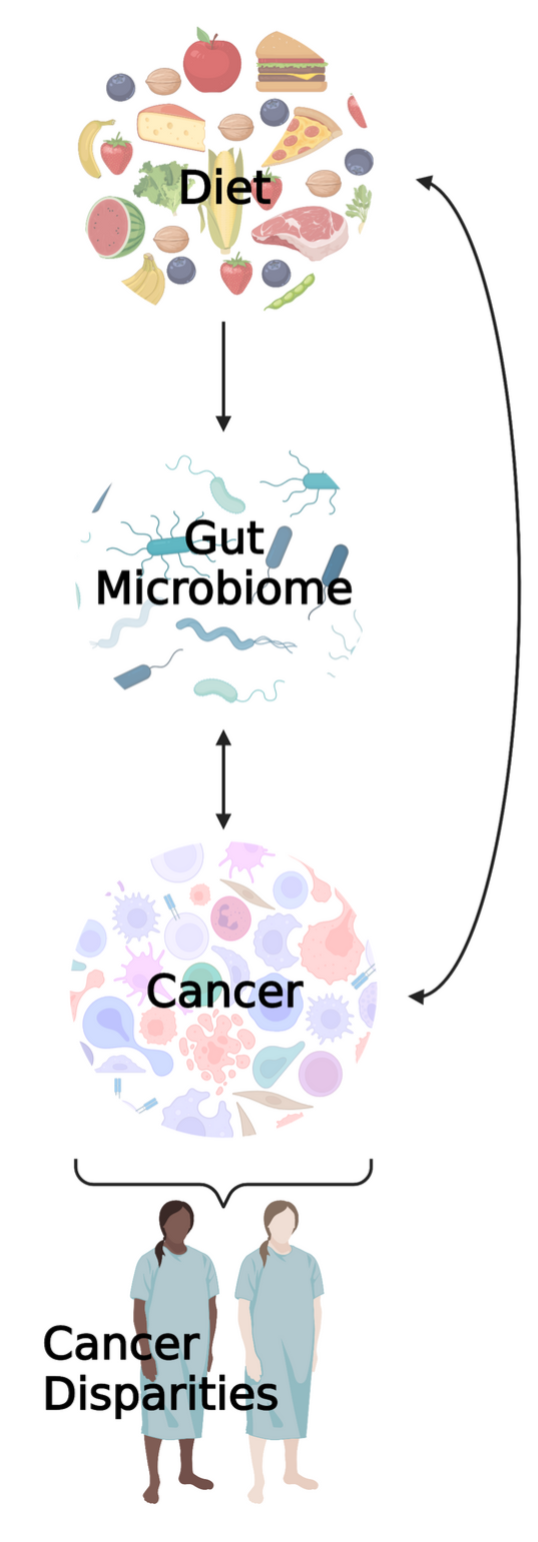
The Byrd Lab studies how diet and other lifestyle factors interact with the gut microbiome and its related metabolites to influence cancer risk and outcomes, with a particular focus on cancer disparities. Most research examining the relationship between the microbiome and cancer has been cross-sectional, meaning the microbiome and cancer are measured at the same time, making it difficult to determine whether changes in the microbiome contribute to cancer development or result from the disease itself. In addition, many studies have included limited representation from historically underserved populations, such as Black/African American and Hispanic/Latino individuals. To address these gaps, we conduct long-term research and prioritize the recruitment of diverse populations to advance understanding of the microbiome's role in cancer development, progression, and survivorship. Our overall goal is to identify clinically relevant microbiome features, such as specific microbes or microbial metabolites that may help predict cancer risk, treatment response, and survivorship outcomes. Actively recruiting studies include:
References:
1. Park DY, Park JY, Lee D, Hwang I, Kim H. Leaky Gum: The Revisited Origin of Systemic Diseases. Cells. 2022;11(7):1-17. doi:10.3390/cells11071079
2. Mo S, Ru H, Huang M, Cheng L, Mo X, Yan L. Oral-Intestinal Microbiota in Colorectal Cancer: Inflammation and Immunosuppression. J Inflamm Res. 2022;15(February):747-759. doi:10.2147/JIR.S344321
3. Flemer B, Warren RD, Barrett MP, et al. The oral microbiota in colorectal cancer is distinctive and predictive. Gut. 2018;67(8):1454-1463. doi:10.1136/gutjnl-2017-314814
4. Komiya Y, Shimomura Y, Higurashi T, et al. Patients with colorectal cancer have identical strains of Fusobacterium nucleatum in their colorectal cancer and oral cavity. Gut. 2019;68(7):1335-1337. doi:10.1136/gutjnl-2018-316661
5. Siegel RL, Miller KD, Fuchs HE, Jemal A. Cancer statistics, 2022. CA Cancer J Clin. 2022;72(1):7-33. doi:10.3322/caac.21708
All images are created with BioRender.com