 Morad Lab
Morad Lab
The spread of cancer cells from primary tumors such as melanoma to the brain - are the most common intracranial malignancy in adults, often carrying a challenging prognosis. At the Bugs and Brain Lab, we are driven by a simple but urgent question: can the microbiota, the assembly of microbes residing within the body, change the course of brain metastasis?
The complex bidirectional communication network between the microbiota of the oral cavity, the gut, and the brain - is emerging as a powerful regulator of human health and disease. Disruptions in this axis have been linked to neurological and neurodegenerative disorders. We propose this axis represents an entirely new and largely unexplored piece of the brain tumor puzzle.
We study how the oral and gut microbiota and microbial products influence two key stages of brain metastasis:
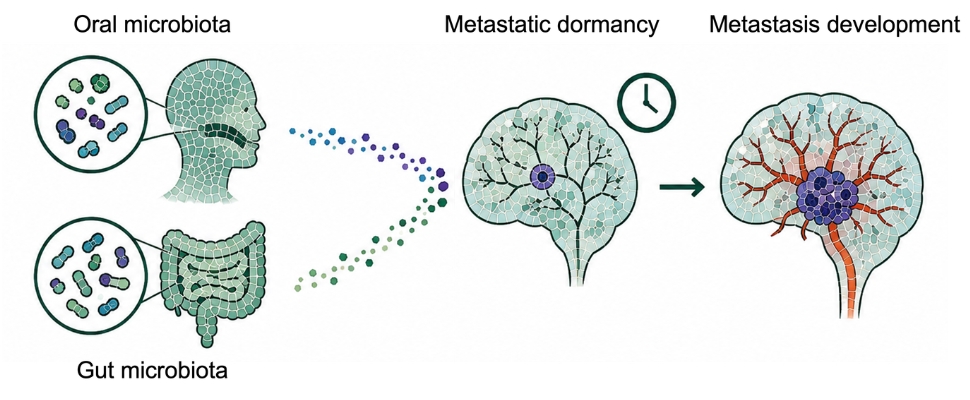
Metastatic dormancy and tumor development
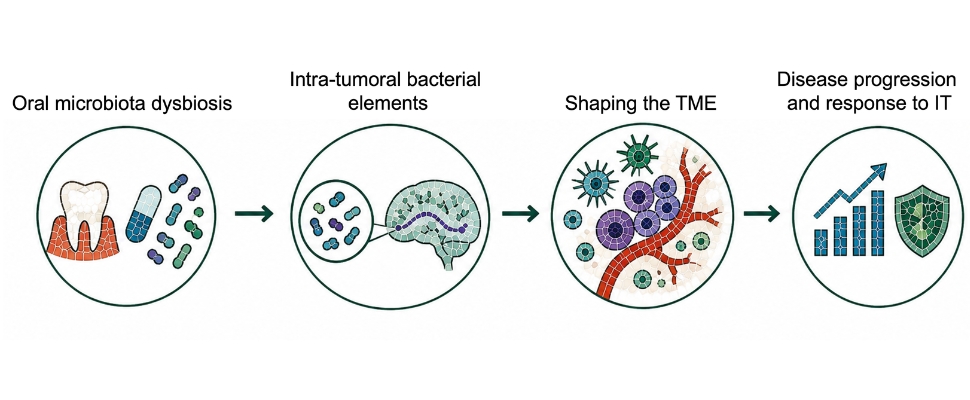
Metastatic progression and response to immunotherapy
Defining these microbe-host interactions across both stages could create unique opportunities to prevent brain metastasis and improve treatment outcomes.
** Beyond metastatic brain tumors, we collaborate across institutions to extend microbiome research to other central nervous system malignancies, including gliomas and leptomeningeal disease (LMD), as well as extracranial cancers. **
|
Before a brain metastasis forms, disseminated tumor cells in the brain can remain dormant for years – a poorly understood process known as metastatic dormancy with profound clinical implications. This project investigates how the oral and gut microbiota influence this dormant state and what tips the balance towards outgrowth and metastasis formation. Understanding these microbe-host interactions at the earliest stages of brain metastasis development can open new avenues for identifying patients at risk and developing microbiome-based strategies to prevent brain metastasis.
|
|
We recently discovered that brain tumors can harbor orally-derived intra-tumoral bacterial elements, introducing an entirely new component of the brain tumor microenvironment (Morad et al., Nature Medicine 2025). Building on this finding, this project explores key unanswered questions: What clinical conditions – from periodontal diseases to cancer-treatment induced oral complications – trigger the transfer of bacterial elements to brain tumors? How do these elements reach the brain? Once inside the tumor, how do they reshape the immune and vascular landscape, drive disease progression, and influence response to immunotherapy? Addressing these questions could shift the current paradigm for brain metastasis treatment and shed light on mechanisms underlying recurrence and resistance to immunotherapy.
|
|
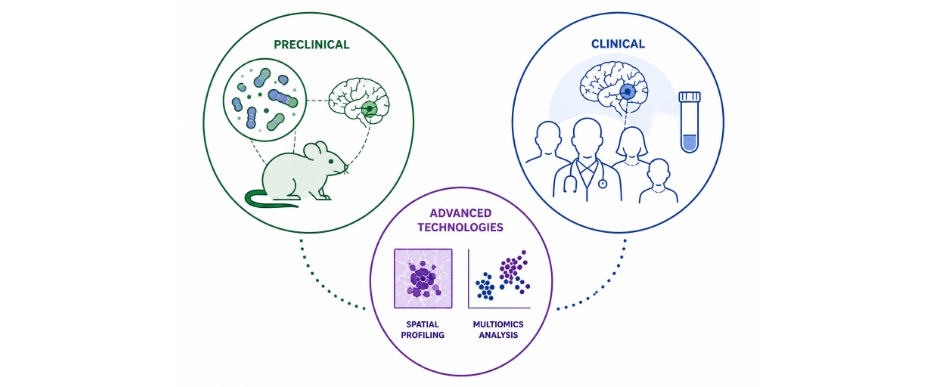
Our multidisciplinary research program bridges fundamental discovery and clinical investigation. On the discovery side, we leverage a broad range of preclinical systems, including in vitro bacterial and cell biology assays, ex vivo organotypic brain slice cultures, and transgenic and syngeneic mouse models brain tumors and microbiome modulation. On the clinical side, we work closely with our clinical collaborators to conduct retrospective and prospective clinical studies – bringing observations from patients back to the lab to uncover mechanisms and develop strategies that that ultimately return to clinic. Throughout, we integrate state-of-the-art technologies such as high-resolution spatial platforms and advanced imaging, sequencing, and bioinformatic pipelines to extract meaningful insights from complex biological datasets.
|